Colors and sounds in motion
Interactive tools for chromo-musical and kinetic intercodes
Politecnico di Milano, Faculty of Architecture, Degree Course in Industrial Design. Supervisor Dina Ricco, AY 2004-2005
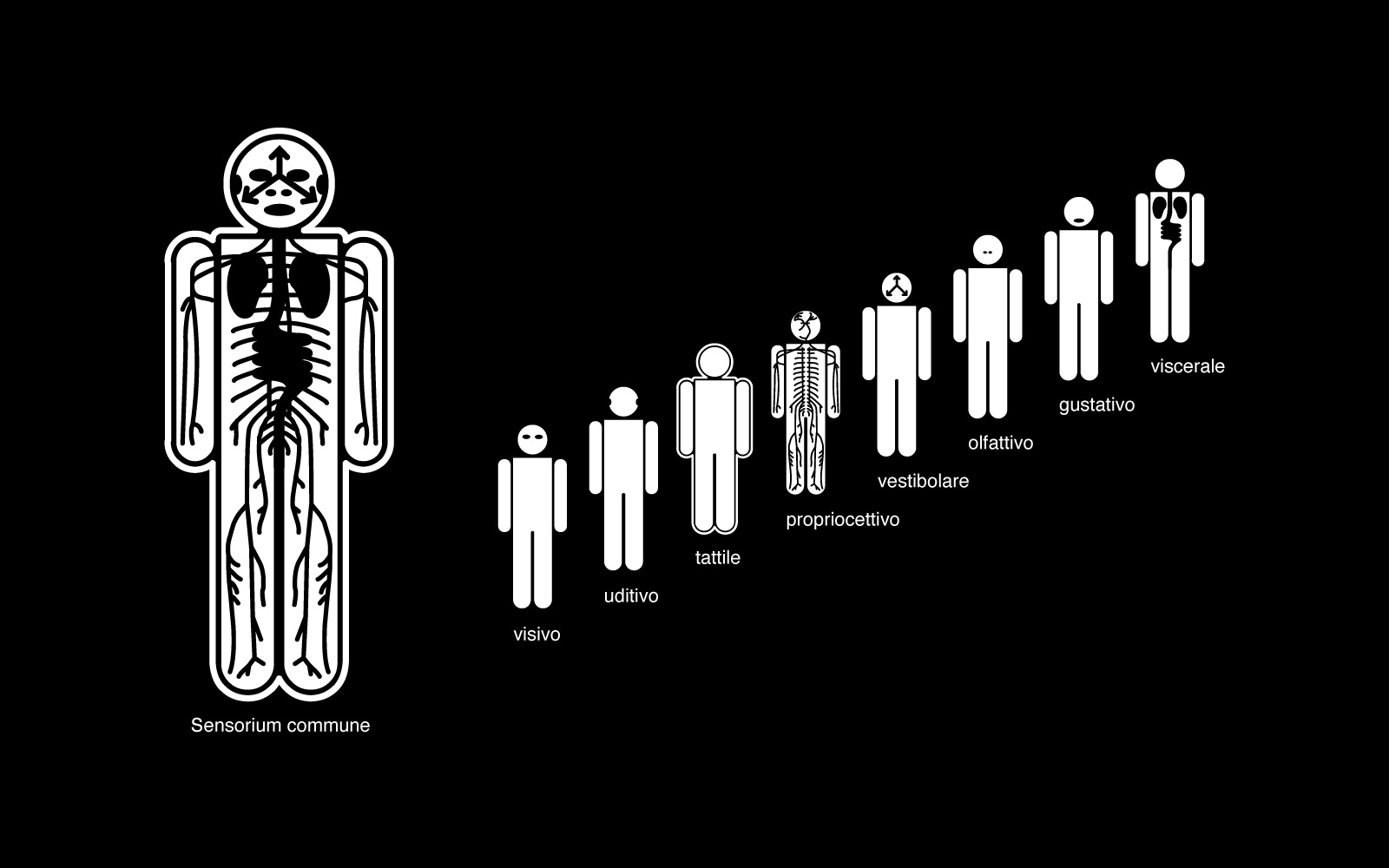
This thesis project was born from an interest in the relationships between perception, language, and representation. The designed intercodes are "RGB Color Keyboard" and "Chain Code".
So-called "colored auditions" are perceptual phenomena that have attracted scientists, doctors, painters,
musicians, and designers. My research starts from these associations, exploring a shared perceptual space
in which different stimuli generate similar sensations. It is a field where individual experience meets
recurring patterns, a world living between multisensory connections and synesthesia, not only audiovisual
ones.
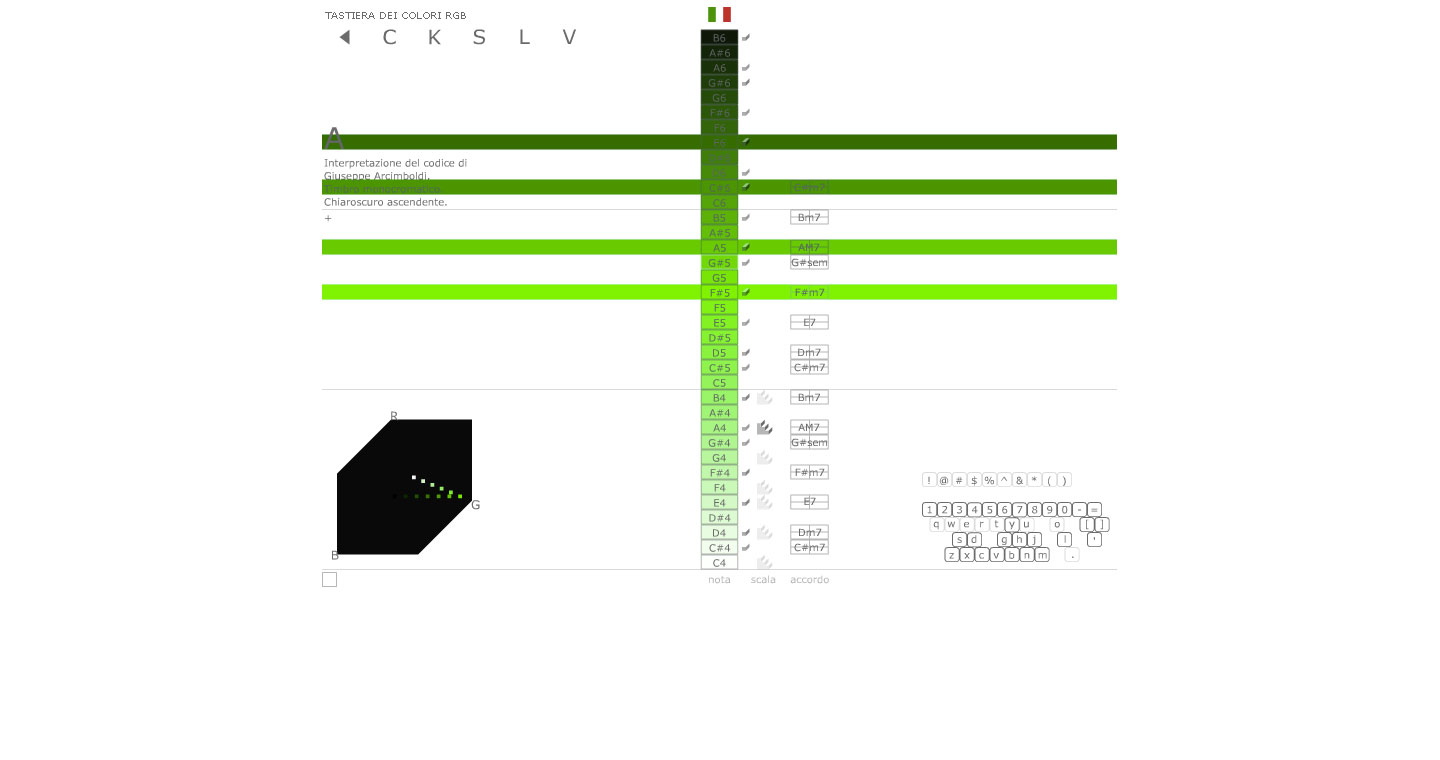
The "RGB Color Keyboard" makes the relation between sound and color immediate, allowing you to see and
listen at the same time, turning musical notes into visual events. Chromatic associations are based on
Dina Ricco's research, especially the book Synesthesia for Design.
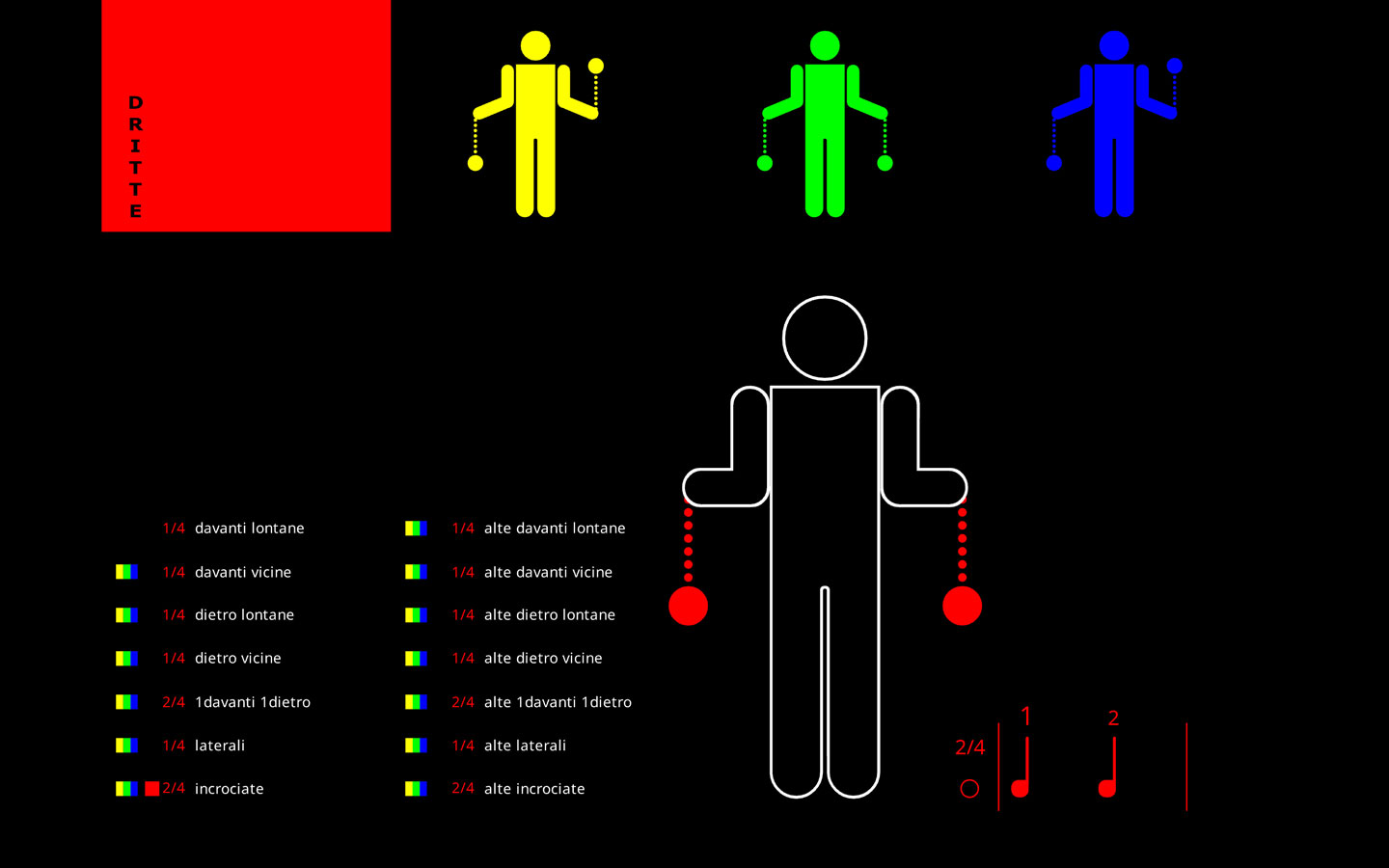
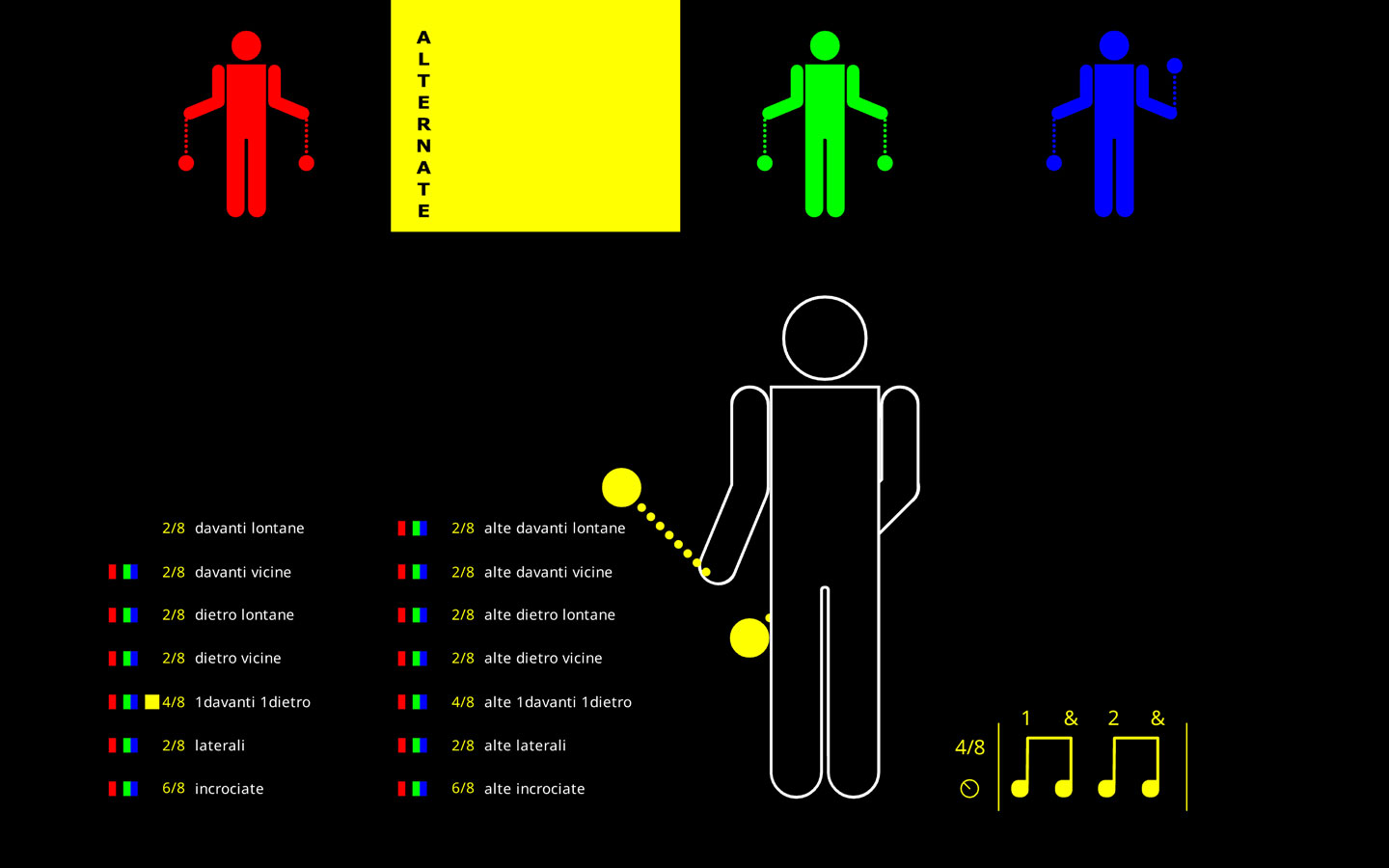
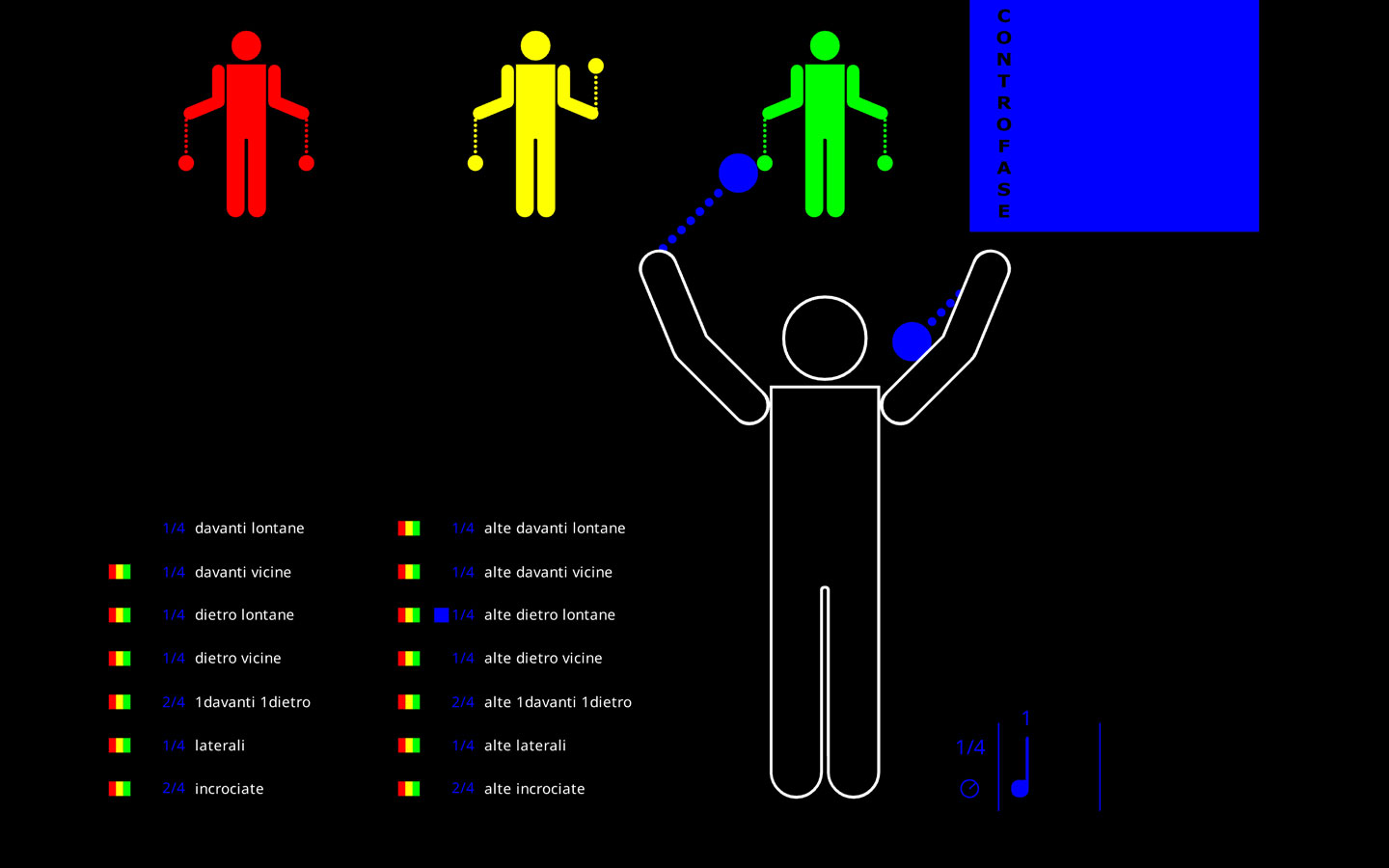
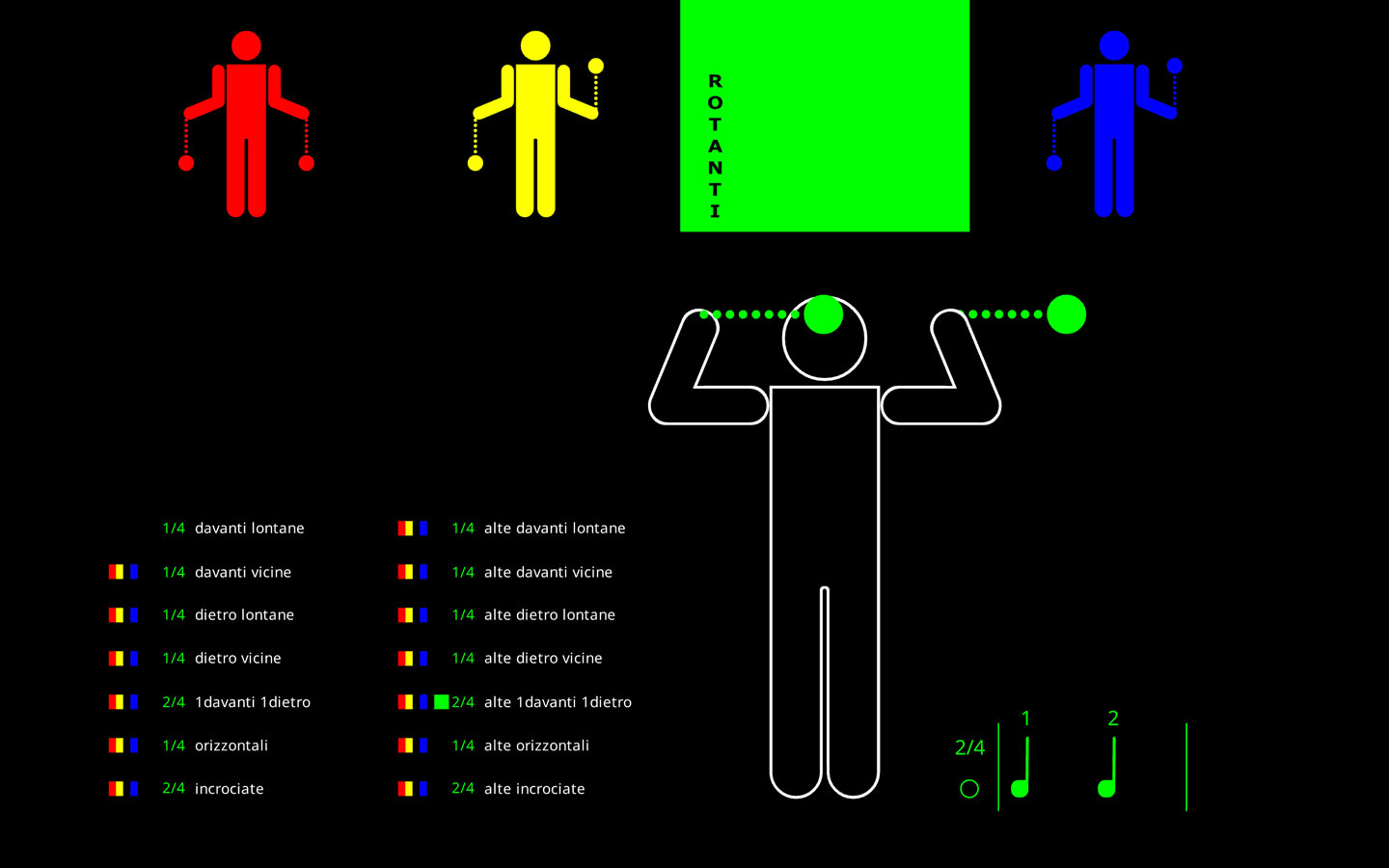
Alongside chromo-musical research, the project extends to experimenting with a new code in the kinetic field. Following Giovanni Anceschi's reflections on notation and intercodes, a system was developed for representing movement in "chains", a juggling discipline based on rhythmic structures.
The two projects share the same approach: translating perceptual phenomena into readable systems where sound, color, and gesture become parts of a single language.
RGB Color Keyboard
Interactive prototype to explore real-time relationships between sound, color, and visual space.
Music and color have long been connected in artistic and scientific research. Over time, different
authors proposed systems to associate notes and colors, opening new languages between listening and
vision. This prototype is designed to make this relation immediate: playing and seeing at the same
time.
When we listen to a sound, we often describe it with the same words used for color: warm, cold, bright,
dark. A common perceptual space seems to exist, a territory where sound and color, form and sensation,
start connecting.
This project comes from the possibility of making visible something we already perceive.
With this tool, spontaneous personal color imagination is suspended to compare with mappings formulated
throughout history. Each system proposes a different way to associate sound and color, allowing users to
recognize and test ideas developed by artists and researchers in different eras.
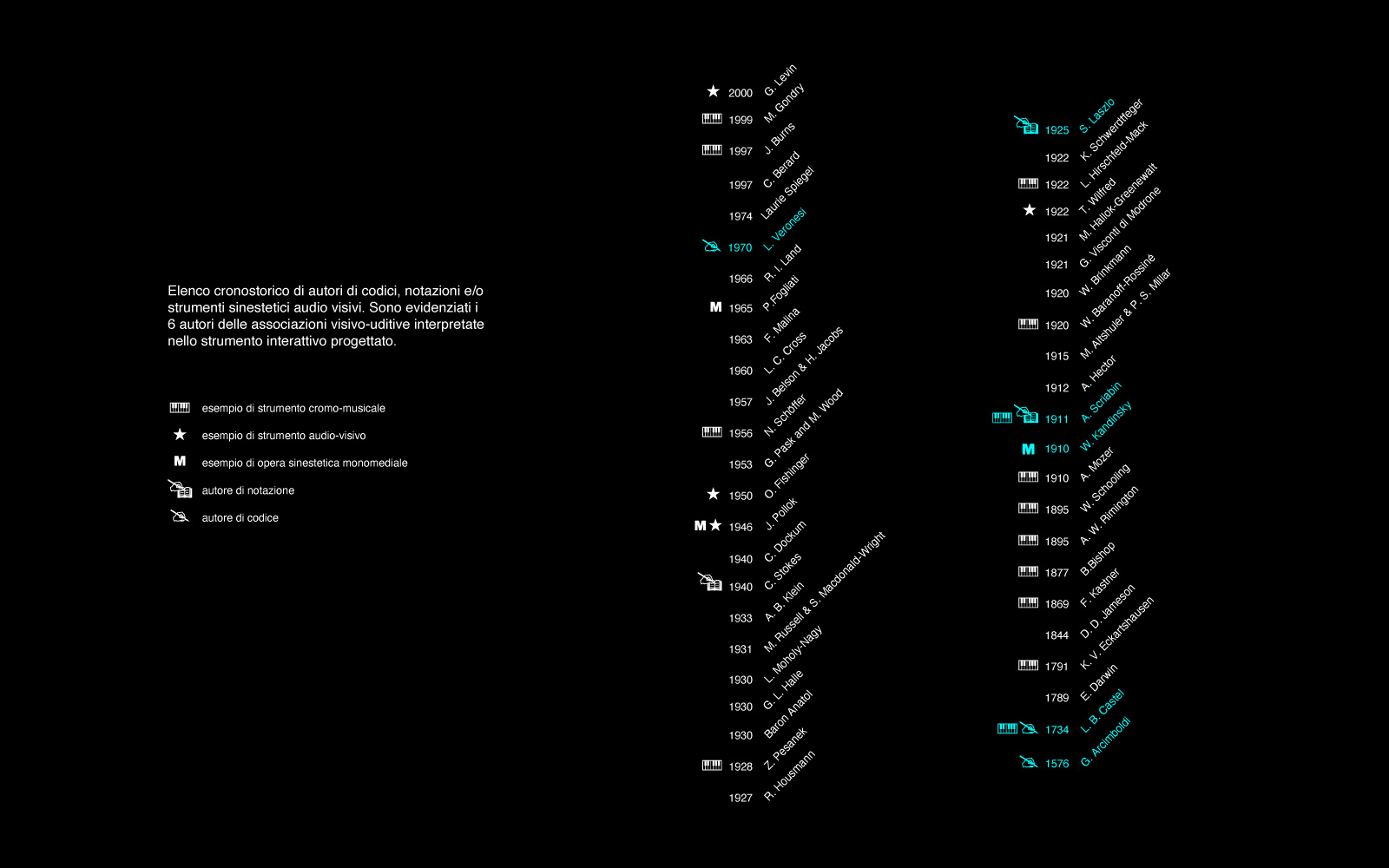
The tool includes kits inspired by different authors and experimental variants:
• Arcimboldi - 1576
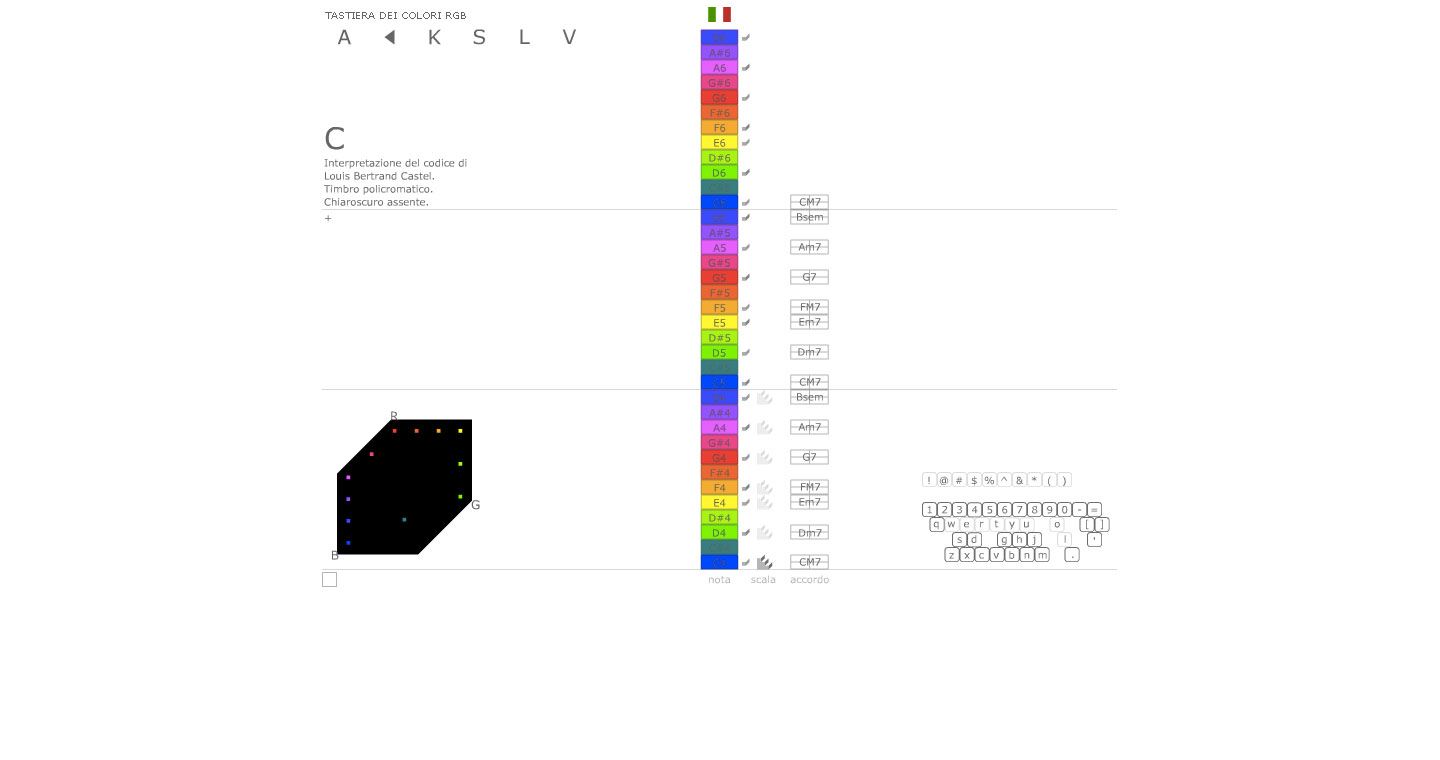
• Castel - 1734
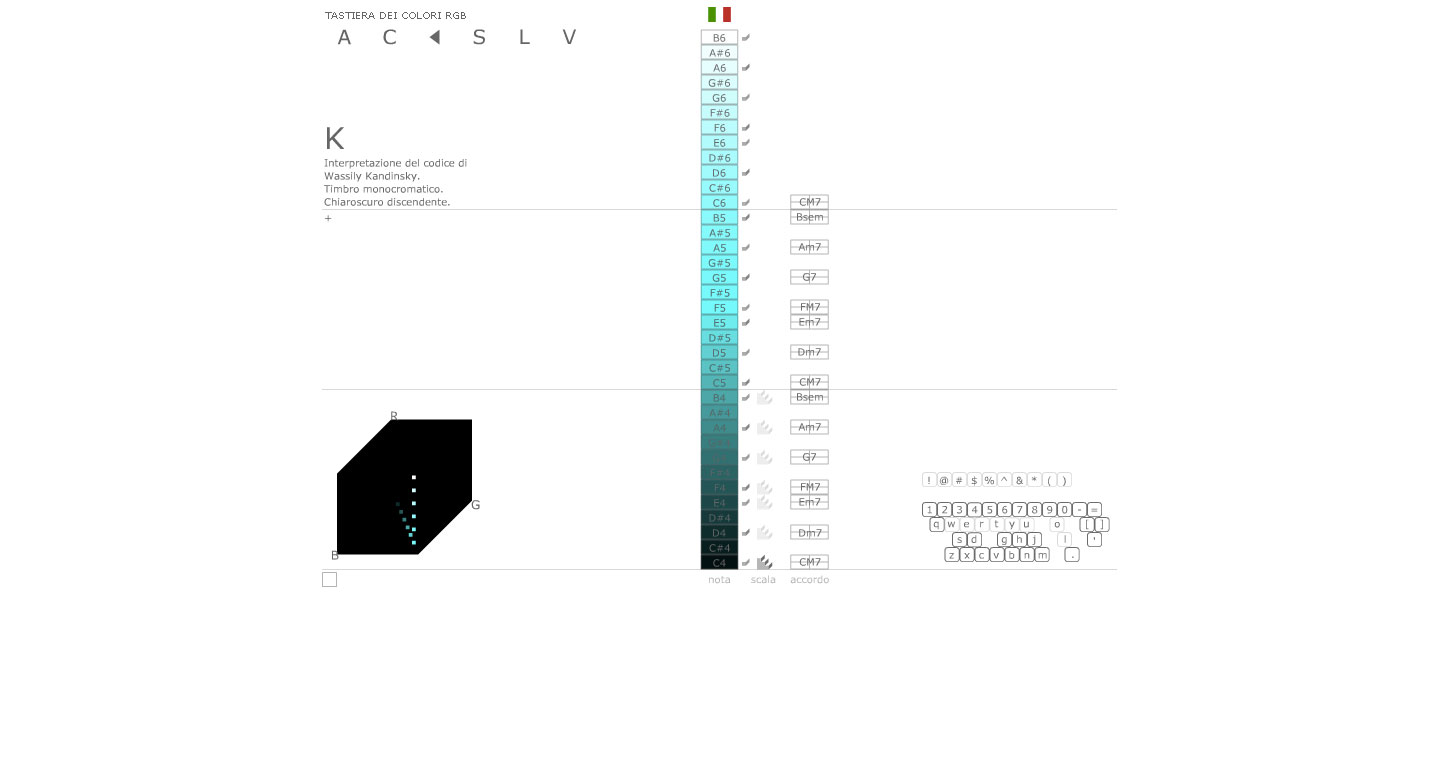
• Kandinsky - 1910
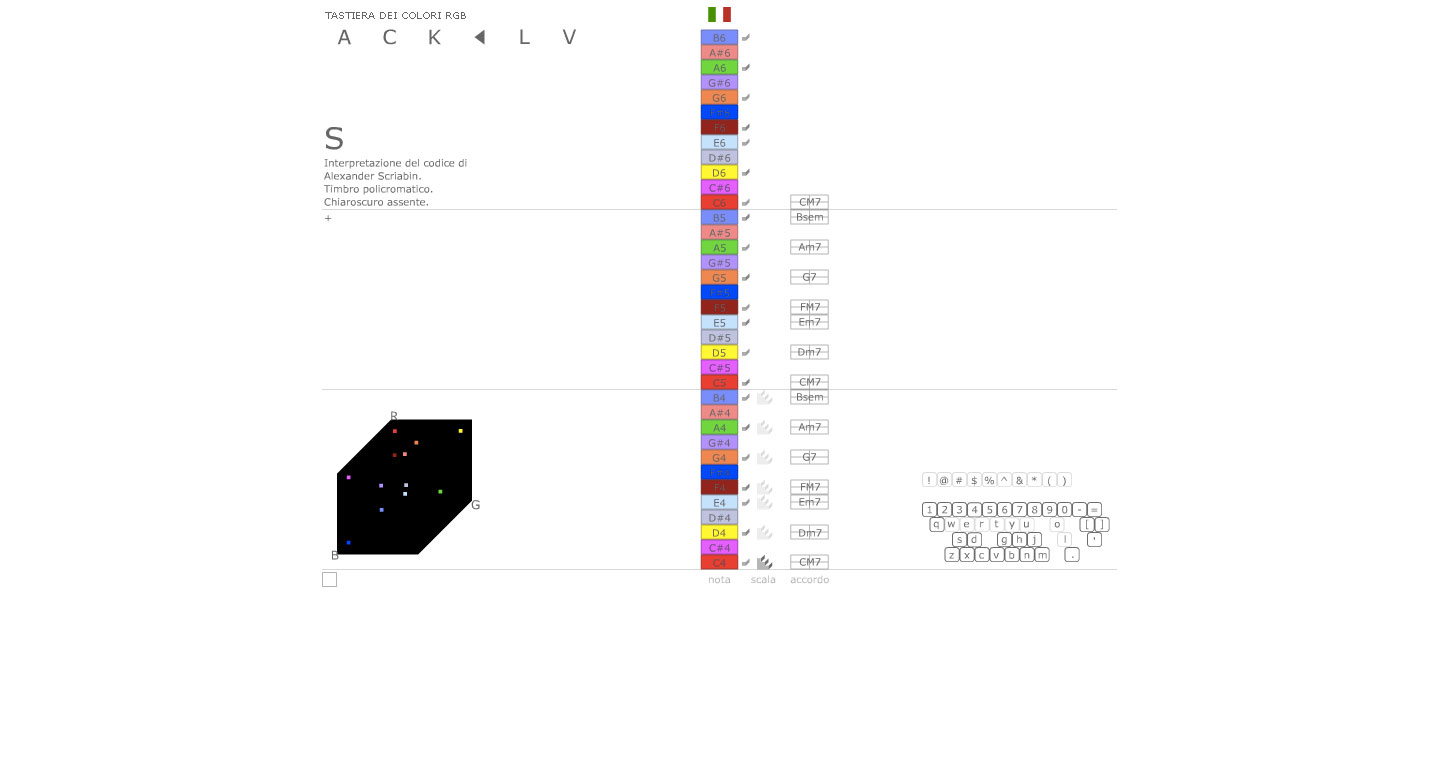
• Scriabin - 1911
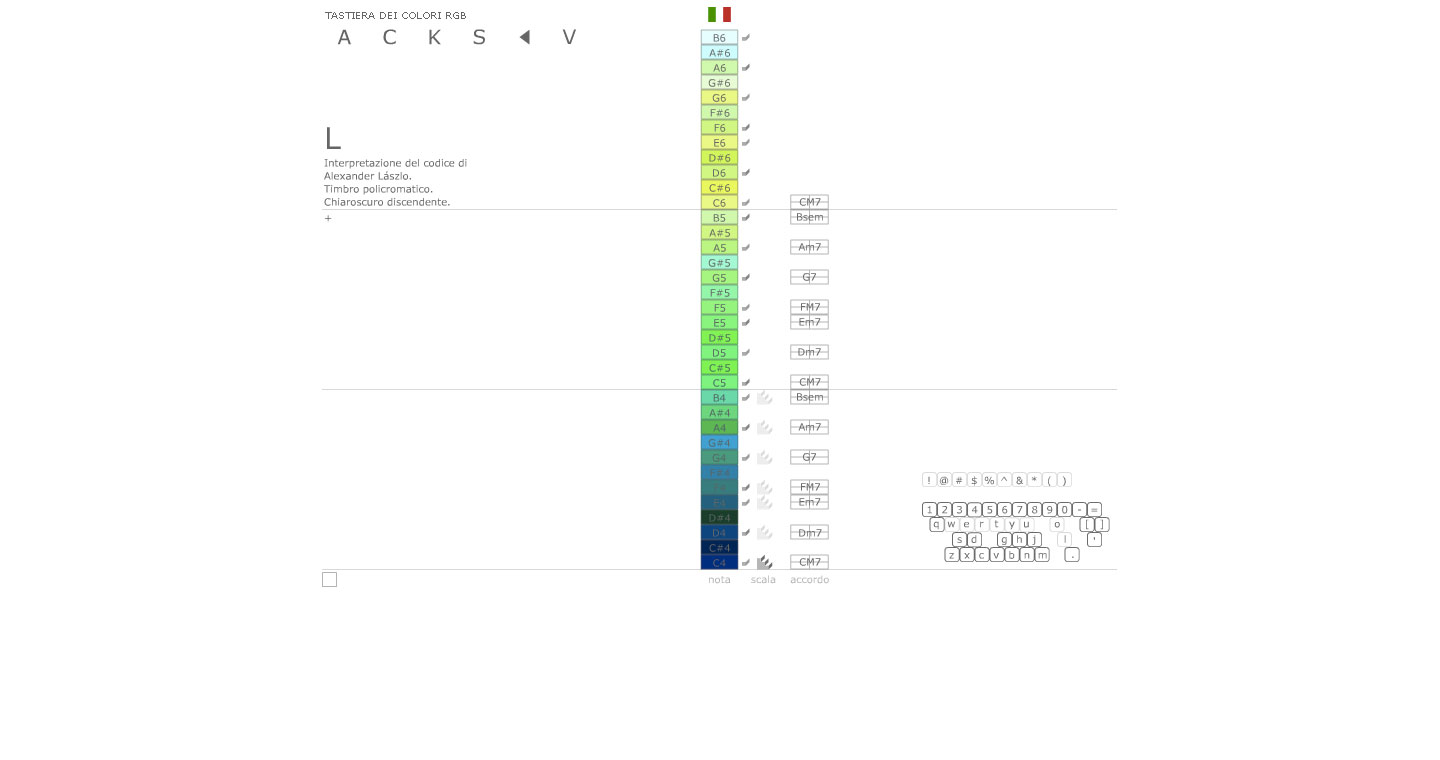
• László - 1925
• Veronesi - 1970
Chromatic associations are based on Dina Riccò's research, especially the text Synesthesia for
Design.
The audio-visual space is organized on 36 notes (3 octaves):
- low sounds → lower area
- high sounds → upper area
Each note triggers a sound event and a synchronized visual response. Behavior depends on the selected
Visual Sample (stripes, networks, grids, full-color blend mode, etc.).
- Color Kit selection
- Scale / Chords control (major/minor, tonic, chords)
- Pattern Engine with MIDI clips and random patterns
- Pattern upload with Load MIDI file
- BPM, internal/MIDI clock, MIDI channel control
- ADSR sound control, volume, timbre (sine/triangle/saw)
- Pan control (auto/random/manual)
- Second-screen visual mode
- Visual-only mode
- Integrated guide and EN / IT language support
You can play and control the instrument with:
- computer keyboard (QWERTY + shortcuts)
- mouse (note triggers/controls)
- external MIDI input
Giuseppe Arcimboldi
He was among the first to propose a correspondence system between sounds and colors (1576). His approach
is intuitive and timbral: he associates colors with instruments and introduces a specific logic, where
high sounds correspond to dark colors and low sounds to light colors, in contrast with many recurring
perceptions.
Louis Bertrand Castel
In 1734 he built the first instrument designed to unite sound and color: the ocular harpsichord. Each
key corresponded to a color, activated by the same gesture that produced the sound. Music thus became a
simultaneously visual and auditory experience, based on an ordered logic inspired by Newton's
decomposition of light.
Wassily Kandinsky
At the beginning of the 20th century, he translated sonic sensations into forms and colors. He did not
seek a technical correspondence between notes and colors, but a perceptual relationship: sound becomes
image. Color, form, and composition function like musical elements, creating an abstract visual language.
Alexander Scriabin
He integrated color and music directly into composition. Notes are not only sounds, but visual events
designed to be perceived together, often with a narrative and expressive function. Color becomes part of
musical structure, not just accompaniment.
Alexander László
He introduced a more structured approach: color is not associated with single notes, but with chords. The
result is a true "chromatic architecture", where sound combinations generate visual combinations. This
allows work on visual harmonies analogous to musical ones.
Luigi Veronesi
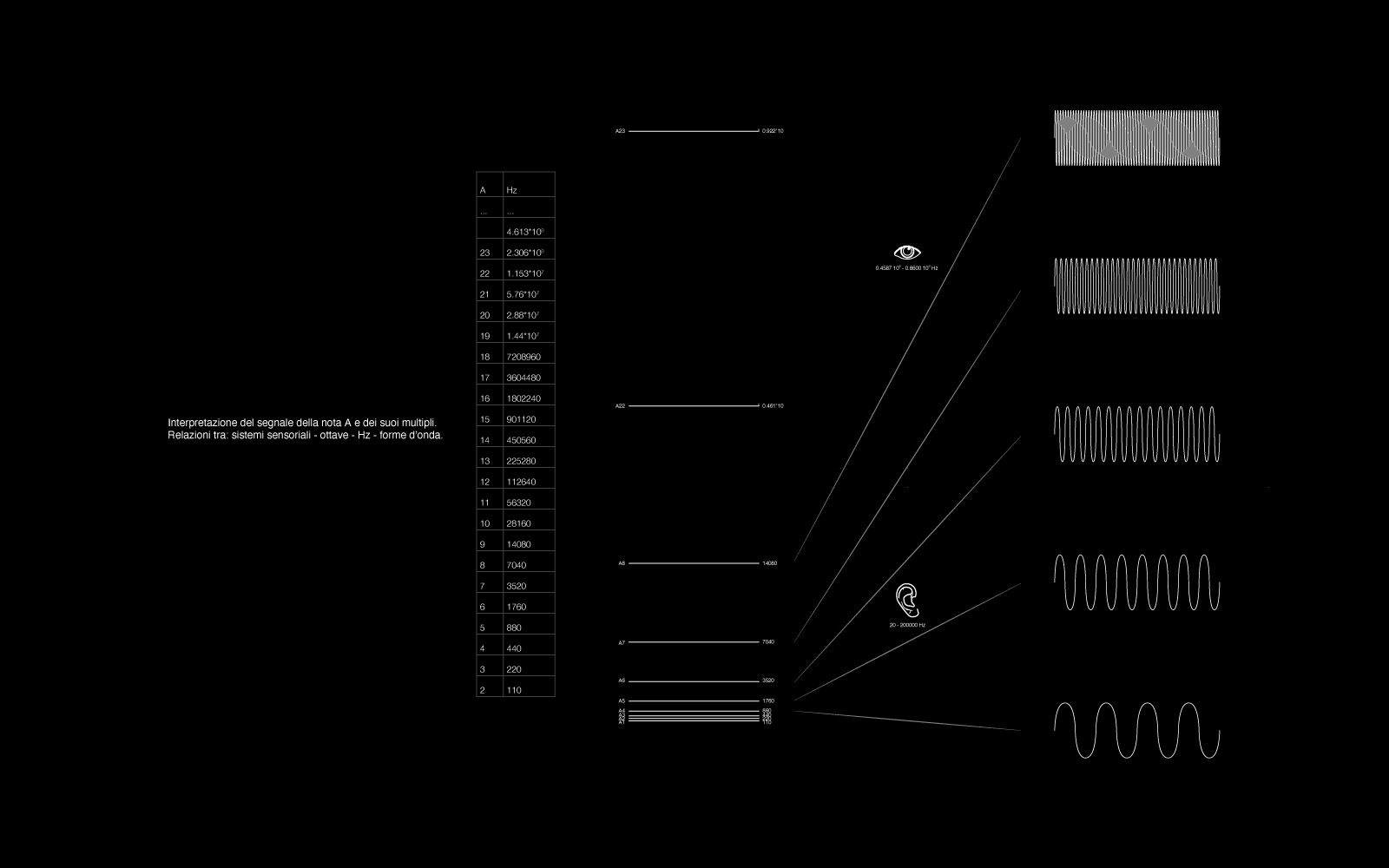
He approached the sound-color relationship in a more scientific way, seeking correlations between sound
frequencies and chromatic values. His work is based on the idea that both derive from wave phenomena,
opening a more physical and systemic reading of the relation between the two domains.
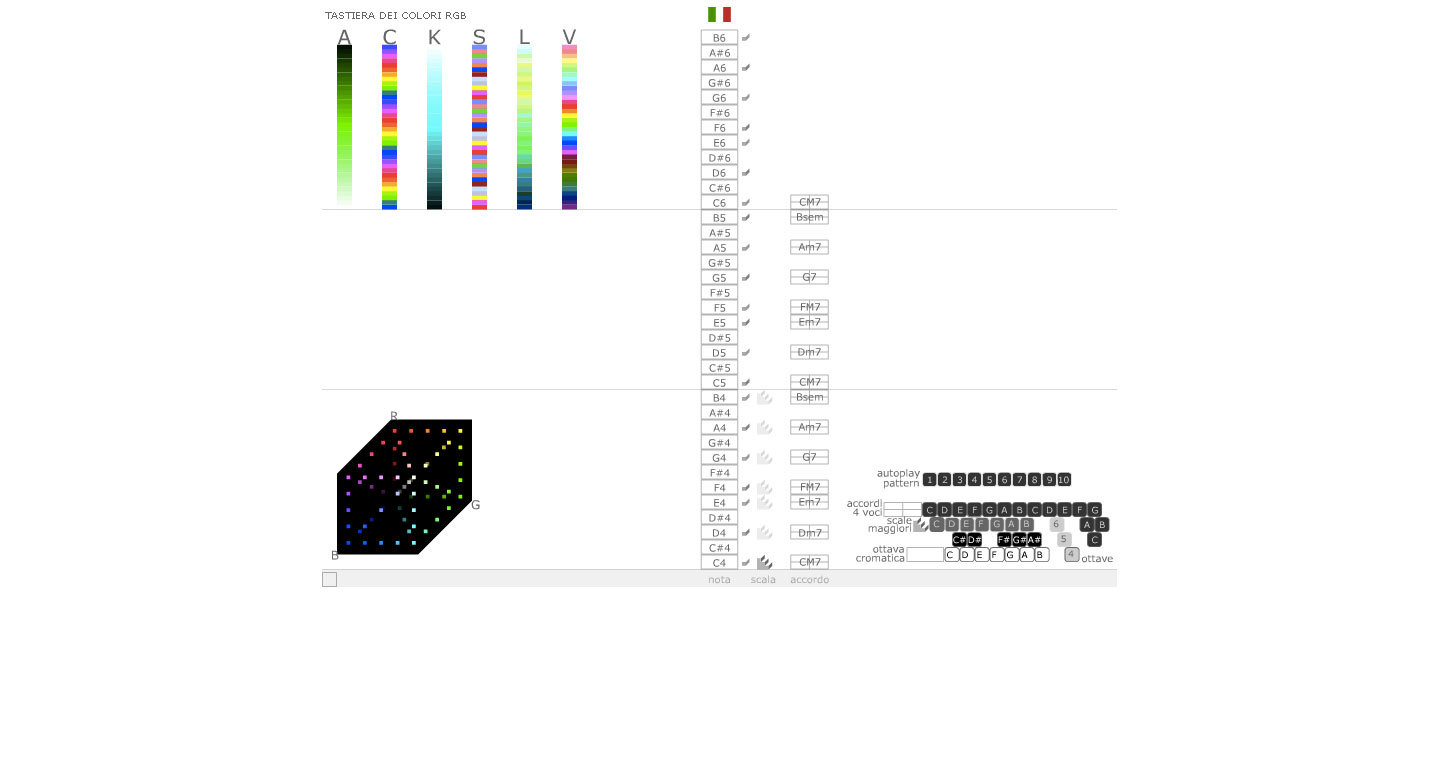
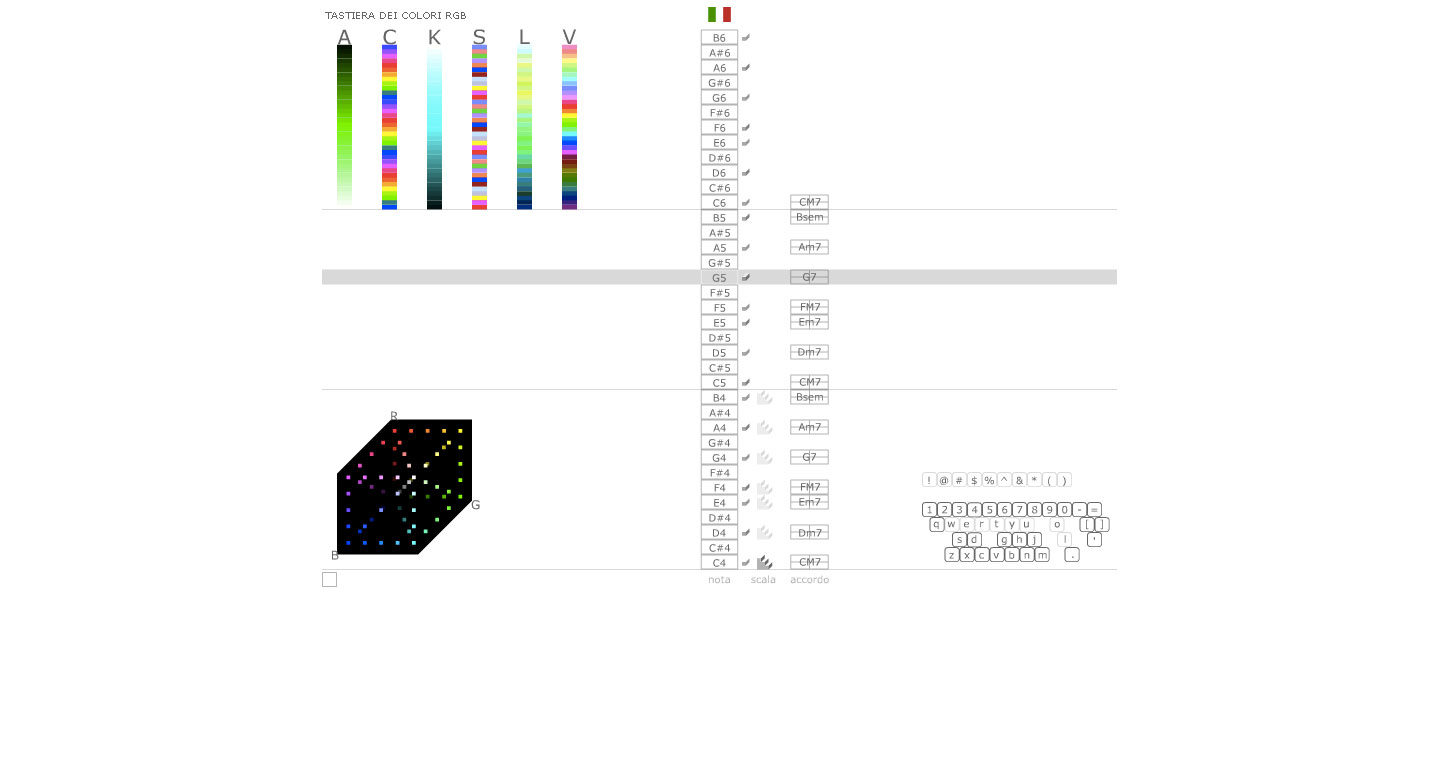
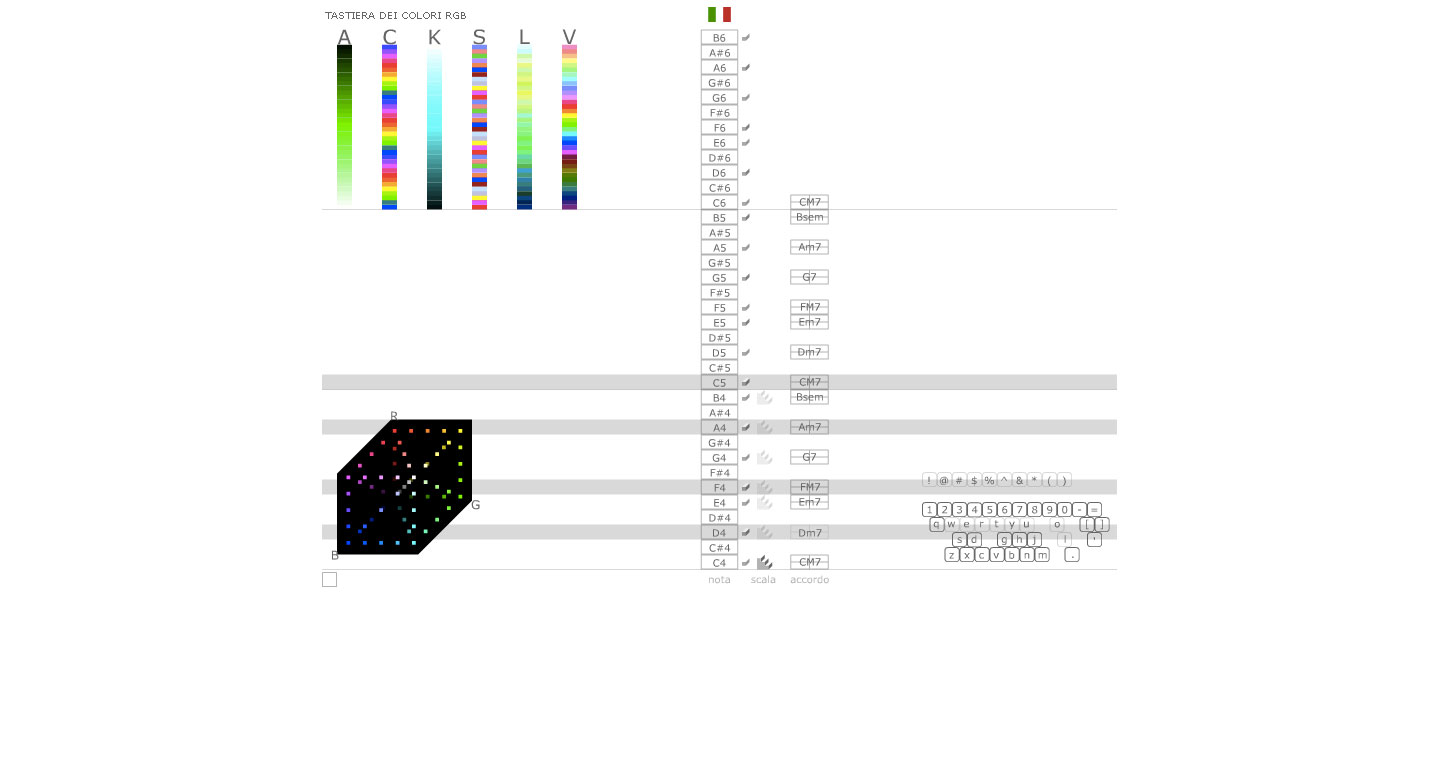
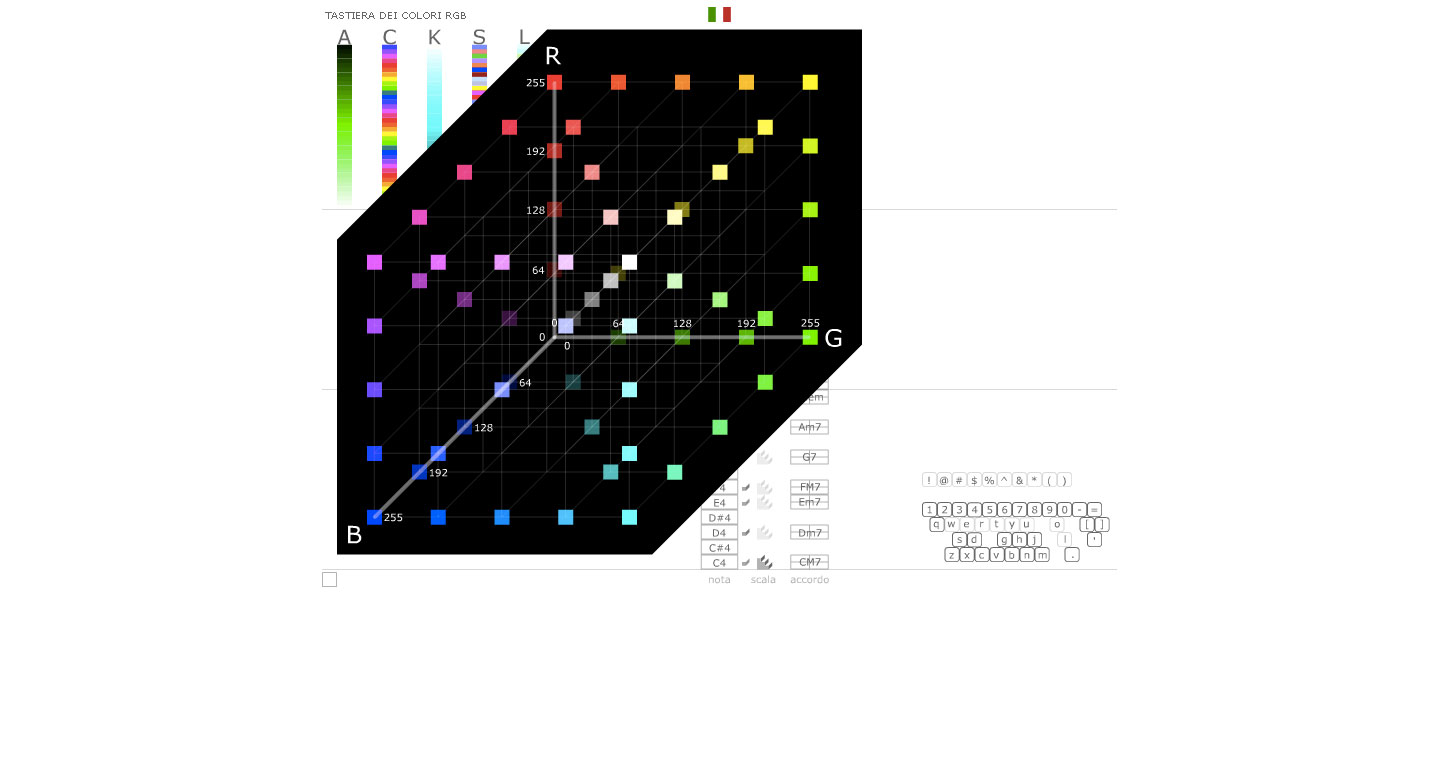
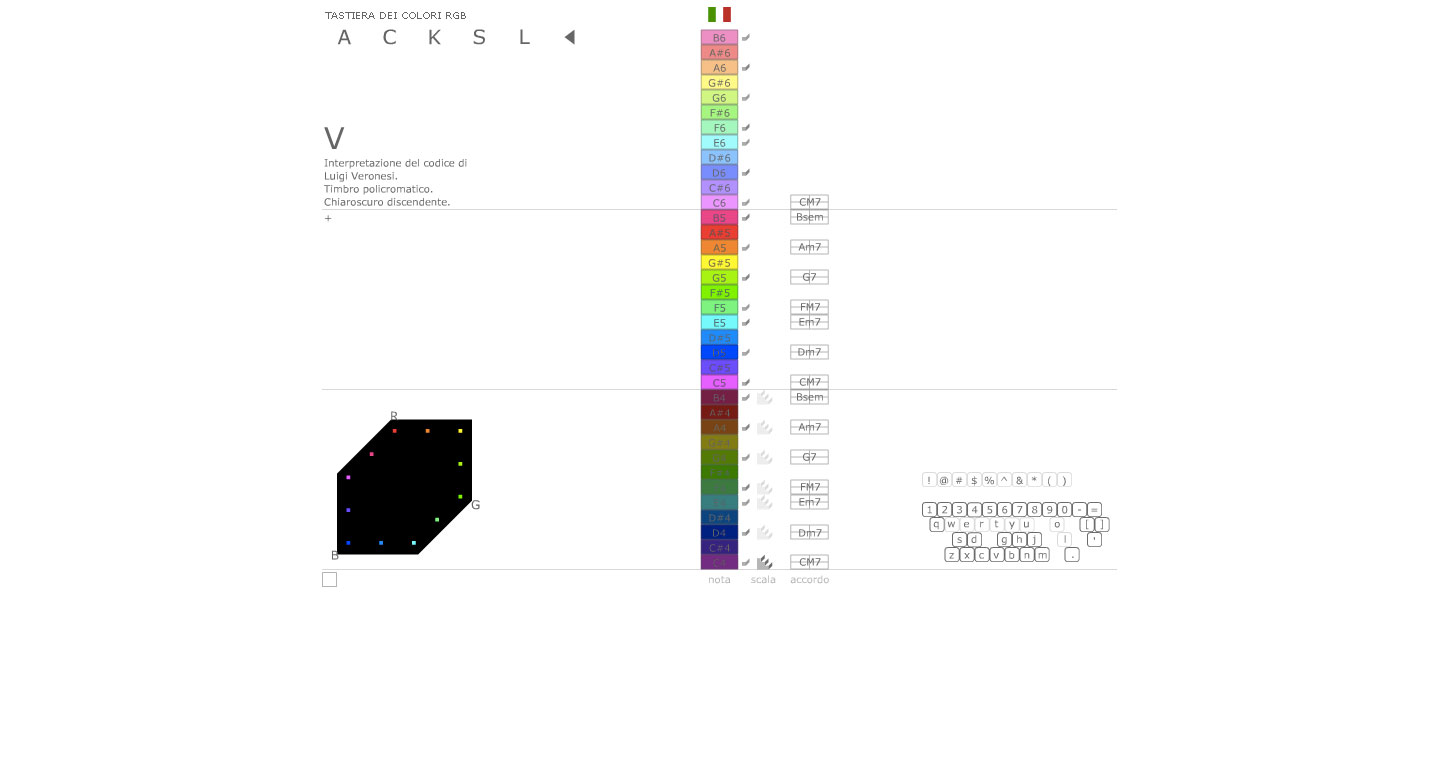
Version 1 of RGB Color Keyboard, programmed in Macromedia Flash SWF, 2005.


















Chain Code
Contemporary dance has roots in the representations of artists such as Loïe Fuller, where a spontaneous impulse often drives body movement in space, but also in authors like Merce Cunningham, who aimed at the rigorous execution of choreographic programs. It is the search for the Idea that links the first modern dancers with abstract synesthetic representations. Notation and code are core elements explored in multimedia artistic production, in computer graphics support, and in digital applications. Signs and symbols become the bridge between understanding and experience. If notation makes reproducibility and execution of an idea possible, perceived sensation becomes the center of interest. Digital technologies enabled broad development of intercode notation tools.
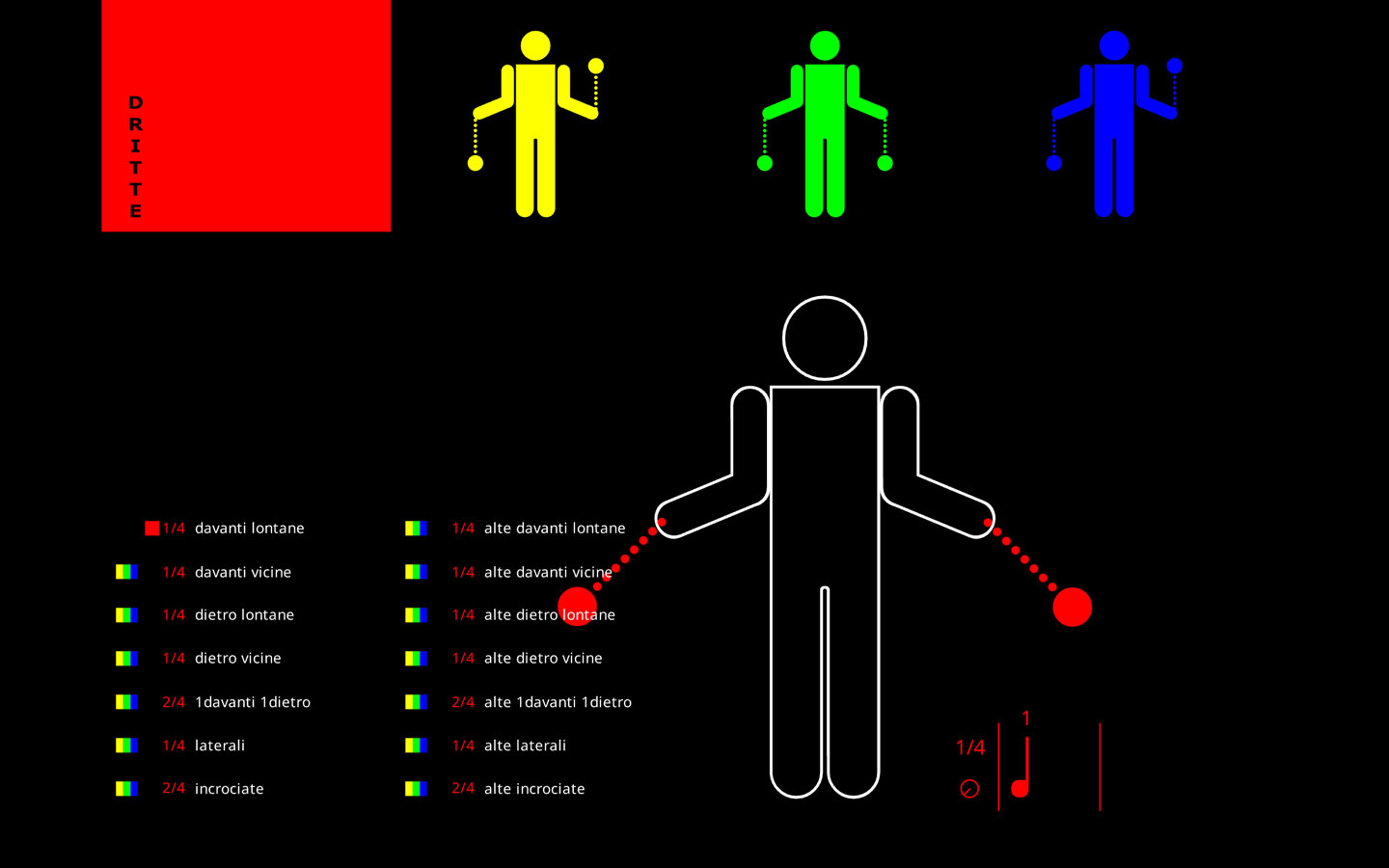
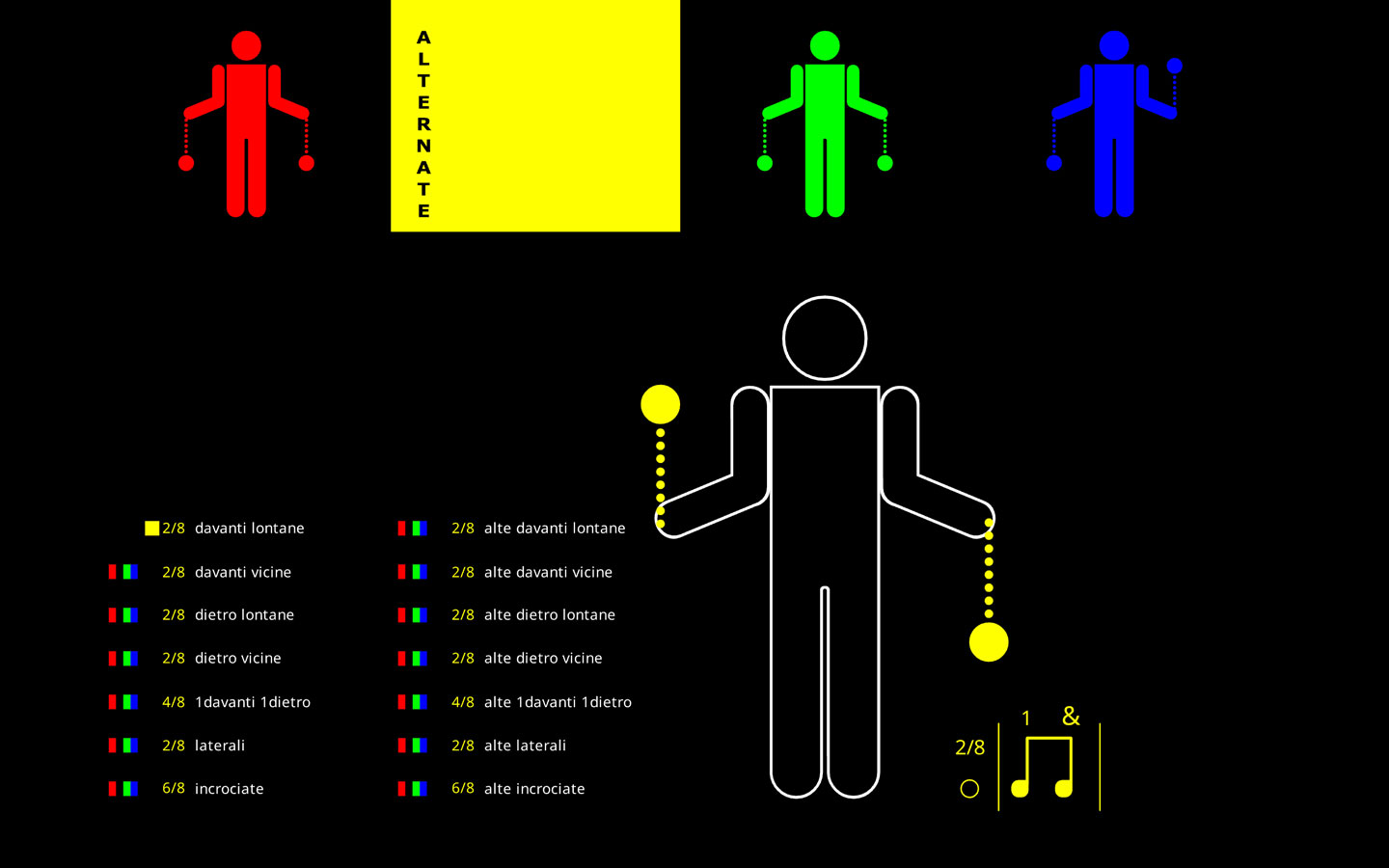
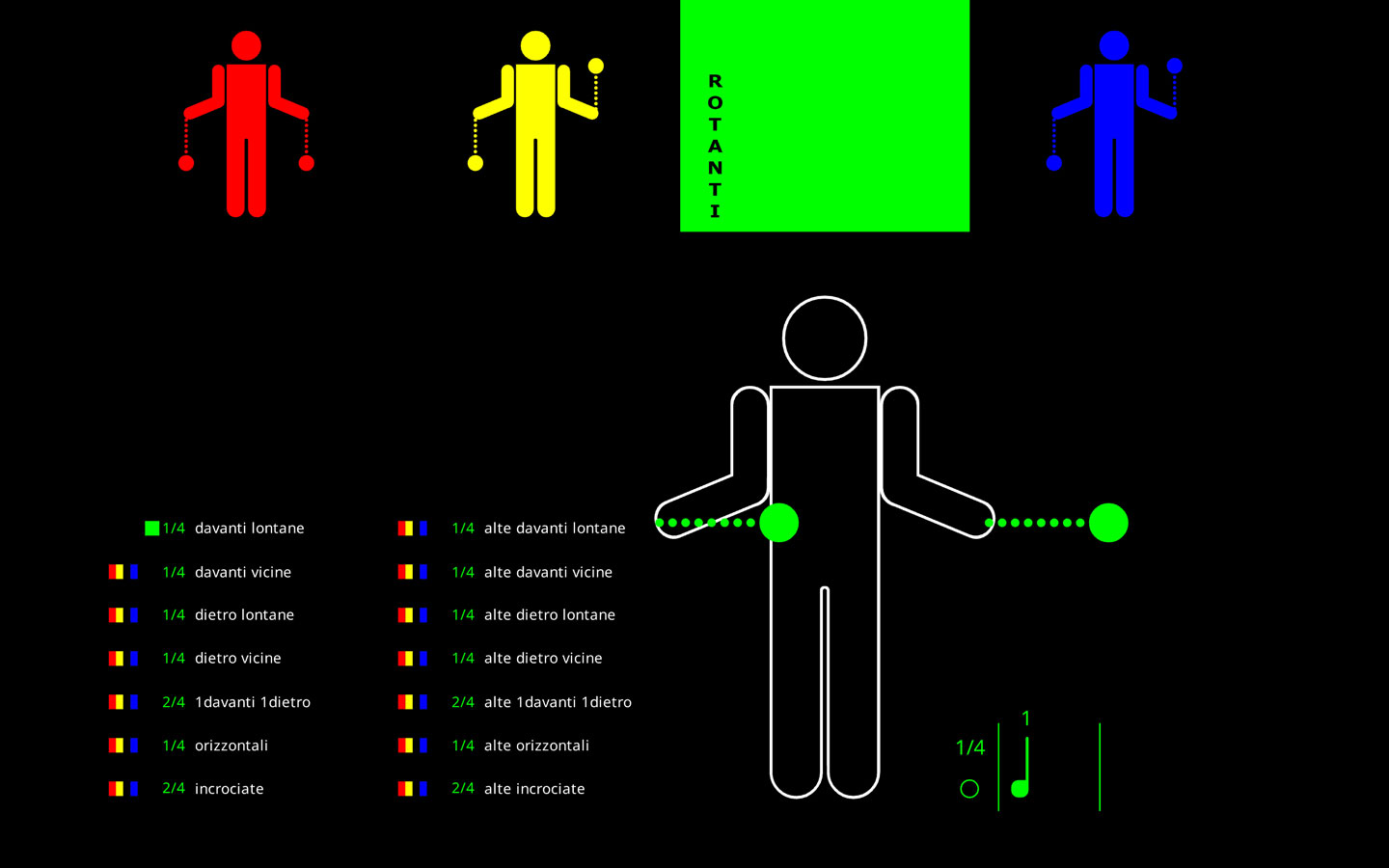
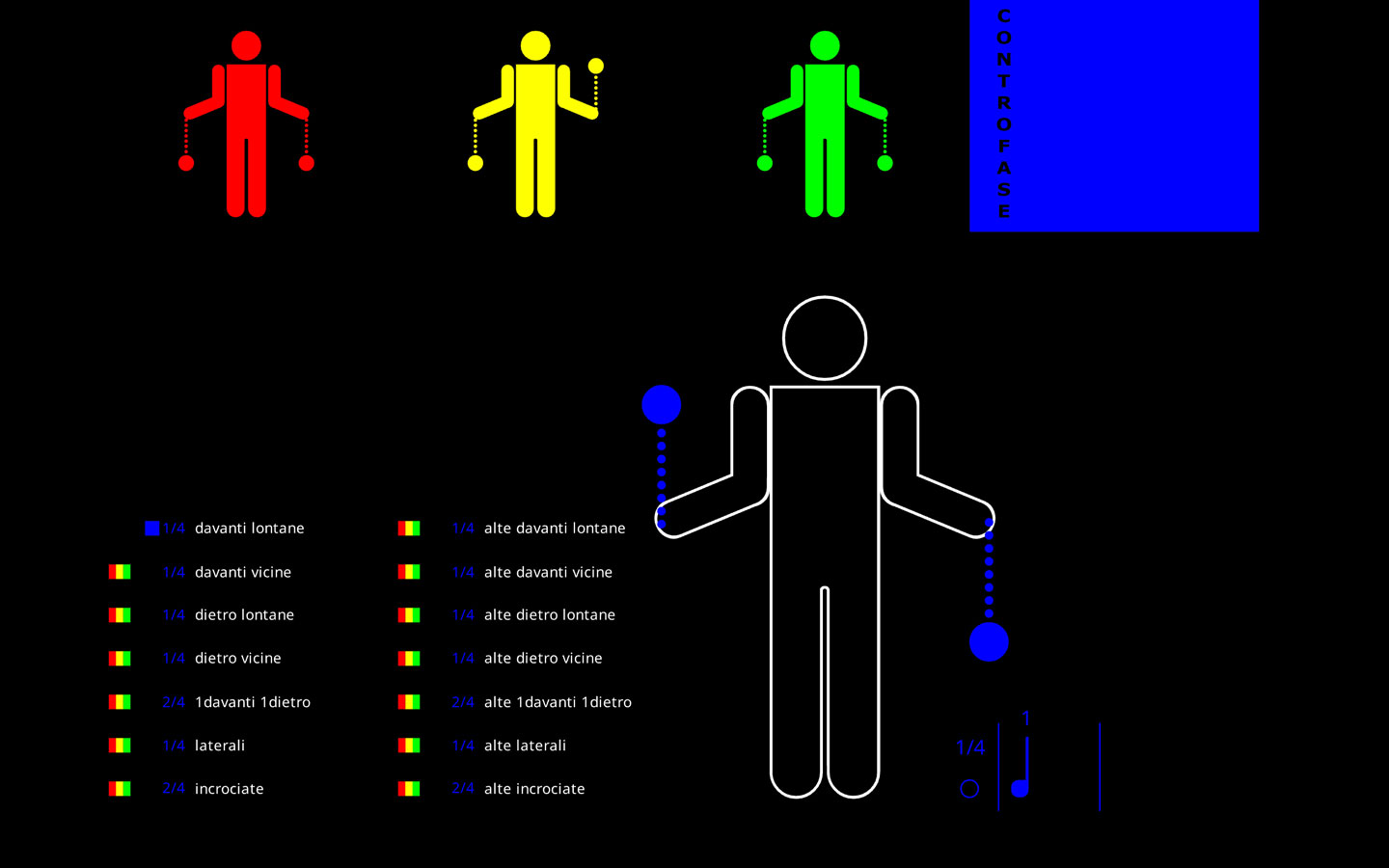
The will to design a code became concrete for a topic not strictly linked to chromo-musical associations, but rather to prescriptive notation. Following Giovanni Anceschi's literature, thesis course coordinator, especially the chapter "Coreographia Universalis" in "The Object of Representation", I designed a code as a possible notation system; therefore, the design of the kinetic code depends on how it can be annotated. The discipline concerns a kinetic art with mainly rhythmic musical relations: juggling, specifically the street-arts discipline known as "chains". The code includes 56 rhythmic figures grouped into 4 rotary movement groups. The notation lasts 96 bars in 4/4 (384 beats), for a total of 246 figures performed at 120 BPM (3'12"). Four rotation mechanisms were identified: straight, alternate, rotating, counterphase.
Version 1 of Chain Code, programmed in Macromedia Flash SWF, 2005.